The unique flavors grown in the fertile lands of Anatolia reaching tables across the ocean is not just a commercial transaction, but also a cultural bridge. Delivering the aroma of Turkish coffee, the olive oil of the Aegean, or the baklava of Gaziantep to a customer in America is a great source of pride for an exporter. However, unfortunately, this sweet dream can often turn into a bitter experience due to mistakes made in logistics processes and poor company choices. Sending food to America is not like sending an ordinary textile product or spare part. You are faced with the reality of American Customs and the FDA (Food and Drug Administration), which implement the strictest food safety procedures in the world, never forgive mistakes, and enforce rules with precision. Many entrepreneurs send their products with high hopes, only to receive a painful phone call informing them that those products have been left to rot in customs warehouses or destroyed instead of reaching the customer. In this article, we address the destruction issue in food shipments, which is a bleeding wound in the industry, its causes, and the formula for guaranteed delivery in all its nakedness.
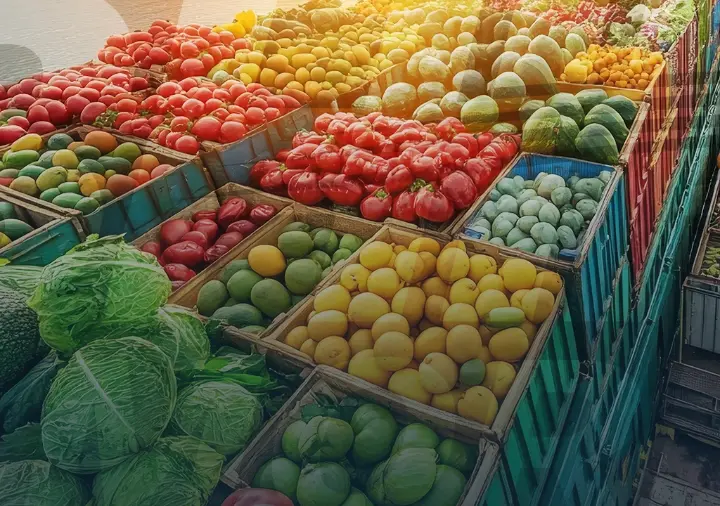
The Silent Drama and Destruction Reality at Customs Gates
Waking up one morning to see "Held in Customs" or "Return Process Initiated" on the cargo tracking screen is the biggest nightmare an exporter can experience. Unfortunately, the vast majority of cargo cases held in customs in America are not due to defective products, but rather the operational inadequacies of the carrier company. There are countless shipments that other logistics companies have taken on with the assurance of "We can handle it," only to crash against the customs wall because they lack the necessary infrastructure. These companies often do not fully understand the sensitivity of food and FDA procedures, and they frequently treat food products as standard cargo, putting them at risk of being destroyed in customs. Every box that is returned or destroyed is not just a financial loss, but also a loss of prestige. When your customer is waiting for their product and you have to explain that it has been destroyed in customs, it becomes nearly impossible to win that customer back. This paints a dark picture that is commonly encountered in the industry, frustrating senders and rendering their efforts worthless.
FDA Wall and Prior Notice Requirement
The United States, under bioterrorism laws, subjects every gram of food entering the country to strict scrutiny. The key to this oversight is the FDA approval and the prior notification system known as the Prior Notice (PN) number. This system requires that before the cargo boards the plane, American authorities are informed that "There is a food item with this content from this manufacturer on my plane." If the logistics company you are working with fails to make this notification, enters incorrect codes, or cannot meet the timing, your cargo will be stamped "unacceptable" the moment it lands on American soil. Working with companies that do not know what an FDA document is or how to obtain one, and who think the process is just about "putting the package on the plane," is knowingly setting yourself up for failure. The question of how to register with the FDA is not a simple form-filling process; it is a legal procedure that declares the compliance of every detail from the product's content to its packaging with American standards. The slightest deviation in this process can cause your products to enter the statistics of returned cargo at customs.
The Hidden Costs of Choosing the Wrong Logistics Partner
Many companies in the market offer competitive prices but lack expertise in food transportation, unfortunately leaving their customers stranded. Food shipping is not a process that can be managed with a "general cargo" mentality. Even for dry goods that do not require a cold chain, there are countless details, from labeling rules on the packaging to the English translation of the ingredients list. Customs issues in the U.S. often arise from overlooking these "small" details. Many competitors pass the buck to the sender when problems occur at customs, trying to evade responsibility by saying, "Your documents are incomplete." However, the real issue is that the company does not work with a customs broker who is knowledgeable about U.S. customs regulations. Working with such companies is no different from playing Russian roulette; whether your cargo will pass or not is entirely left to chance. However, trade is conducted not by chance, but by strategy and knowledge..
A First and Only in the Industry: Special Food Operation with UPS
In this chaotic environment, the Ship to More brand stands out from all its competitors, holding a very sharp and clear status. Thanks to its structure that does not leave its business to chance, strictly adheres to procedures, and aims for operational excellence, Ship to More is currently the only company authorized by UPS for food transportation in Türkiye. This is not just a simple partnership; it is a testament to immense trust. UPS, one of the largest cargo giants in the world, has entrusted a risky operation like food transportation solely to the expertise of Ship to More. This privilege means the following for shippers: Your cargo travels not through the "gray lines" or "risky routes" used by other companies, but directly through the "White Line" established by UPS and Ship to More, in a fully authorized and approved manner. This minimizes the risk of your products being held up in customs, and the operational process runs as smoothly as a clock.
The Power of Guaranteed Delivery with Our Own Customs Consultants
The main strength that sets Ship to More apart from others and enables it to achieve a success rate close to 100% in the U.S. food customs clearance process is that it works directly with its own customs consultants in the U.S. In this system, where there are no intermediaries, brokers, or ambiguous third-party firms, Ship to More's own team prepares the customs declarations while your cargo is still in the air. Every document, from the bill of lading to FDA notifications, is checked by expert consultants. This way, the promise of guaranteed customs delivery transforms from an empty slogan into a concrete service standard. Consultants intervene immediately in case of any questions, preventing delays in the cargo. While customers of other companies cannot find anyone to address their concerns at customs gates, Ship to More customers enjoy the comfort of knowing that they have a massive operational power behind them.
Which Products Can Be Safely Shipped?
One of the most curious topics in food export is product diversity. Questions like "Can olive oil be shipped to America?" or "Is shipping dry food prohibited?" occupy people's minds. Thanks to Ship to More's expert infrastructure, many non-perishable food items that are properly packaged and produced according to FDA standards can be safely shipped. A wide range of services is offered, from olive oil to nuts, Turkish delight to spices, and packaged snacks to canned products. In fact, even homemade food can be shipped abroad, provided that the product is packaged and labeled according to commercial standards, with the guidance of Ship to More. The important thing is that the content and packaging of the product comply with American standards; the rest is under the safe wings of Ship to More and UPS.

Full Support in FDA Documentation and Registration Processes
Many manufacturers hesitate to export due to the fear of sending products without FDA certification, even if they trust the quality of their products. Ship to More not only handles transportation but also acts as a consultant, supporting manufacturers in their FDA registration processes. The registration of the facility, the determination of FDA codes for products, and the accurate and separate entry of Prior Notice notifications for each shipment are standard parts of the operation. This system alleviates the bureaucratic burden from the manufacturer’s shoulders, allowing them to focus solely on producing the best product. Complex forms, unclear legal terms, and technical details are managed by the expert teams at Ship to More. Thus, the international food shipping process transforms from a feared bureaucratic tangle into a smooth trade process.
Don't Risk Your Effort and Money
While the American market offers enormous opportunities for food exporters, the ticket to enter this market is the right logistics partner. The experiences of thousands of victims whose products have been destroyed, returned, or lost in customs warehouses while working with other companies have painfully highlighted the difference between those who "act like" they are doing the job and those who "actually do" it. Ship to More, the only company authorized by UPS for food transportation, transforms this risky game into safe trade with its own customs brokers and flawless FDA process management. If you don't want your products to end up as waste and your dreams to fade at the customs gates, you should proceed with a proven system instead of embarking on an adventure. Remember, the most expensive cost in food shipping is the cargo that does not reach its destination. When you ship with Ship to More, you only pay for the shipping fee; peace of mind, security, and guarantee are a natural part of this service.